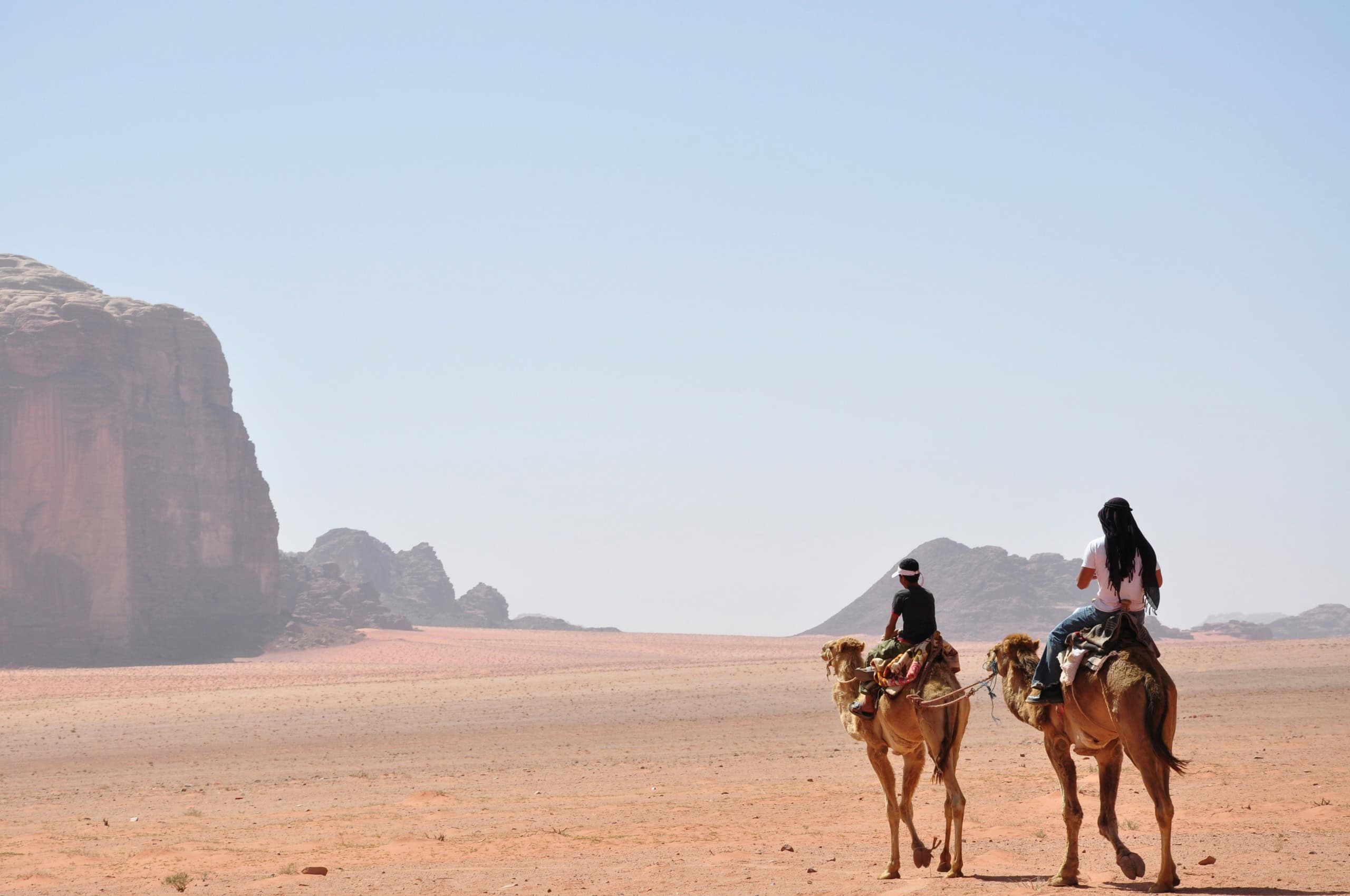

Middle Eastern geography—its deserts, rivers, and strategic trade routes—fundamentally shaped Arab storytelling traditions and cultural identity. The harsh desert environment, the Fertile Crescent’s agricultural abundance, and historic trade networks each produced distinct narrative styles and values that remain central to Arab culture today.
- ✓Desert geography created values of resilience, hospitality, and oral tradition—core themes in Arab stories passed down for centuries.
- ✓River-based civilizations (Tigris, Euphrates, Nile) developed agricultural narratives and written storytelling traditions tied to seasonal cycles and irrigation.
- ✓Trade routes connected the Middle East to Africa, Asia, and Europe, blending local narratives with influences from distant cultures into hybrid story forms.
- ✓Geographic isolation of mountain and oasis communities preserved unique regional stories and dialects that remain distinct today.
- ✓Landscape features (mountains, deserts, coastlines) became metaphors in Arab literature, poetry, and folk tales that shaped how Arabs express identity and values.
- ✓Geography continues to influence contemporary Arab narratives around water scarcity, regional identity, and intercultural connection.
How Desert Geography Shaped Arab Storytelling Traditions
The Arabian Desert’s harsh, expansive landscape created a storytelling culture built on resilience, community, and oral transmission. Nomadic and semi-nomadic peoples relied on stories to preserve knowledge, pass down values, and build social bonds around campfires during long journeys across vast, empty terrain.
Desert life created specific narrative themes: survival against impossible odds, the value of hospitality to strangers (a life-or-death practice when water and shelter were scarce), courage in facing danger, and loyalty to tribe and family. These themes appear repeatedly in pre-Islamic Arabian poetry, early Islamic narratives, and modern Arab literature. The desert’s isolation also meant stories were preserved orally with remarkable accuracy—storytellers were memory-keepers for entire communities.
Geographic isolation of desert communities also meant each oasis and region developed unique story variations, dialects, and cultural practices. Stories about water sources, animal guides, and star navigation became sacred knowledge tied directly to survival and territorial identity.
How River Valleys Created Agricultural and Written Narratives
The Tigris, Euphrates, and Nile Rivers created fundamentally different storytelling traditions than the desert. River-based civilizations developed settled, agricultural societies where seasonal flooding, irrigation, and written record-keeping became central to survival and identity.
In Mesopotamia and Egypt, stories shifted from purely oral tradition to written form—cuneiform tablets, papyri, and inscriptions preserved narratives about gods, kings, harvests, and cosmic order. The Nile’s annual flood became a metaphor for renewal and divine order in Egyptian narratives. Mesopotamian stories (like the Epic of Gilgamesh) emerged from river-based civilizations with complex irrigation systems, urban centers, and hierarchical societies—all reflected in their stories’ themes of power, mortality, and human struggle against fate.
Agricultural cycles shaped narrative structure too: planting, growth, harvest, and dormancy became templates for storytelling about life, death, rebirth, and divine providence. These patterns persist in contemporary Arab narratives tied to land, seasons, and ancestral connection to place.
Trade Routes and the Blending of Regional Narratives
The Middle East’s position at the crossroads of Africa, Asia, and Europe made it a hub for merchant networks and cultural exchange. Trade routes—land routes like the Silk Road and sea routes through the Red Sea and Persian Gulf—didn’t just move goods; they moved stories, ideas, and narrative traditions across vast distances.
Arab traders and travelers encountered Indian, Persian, Chinese, and African storytelling traditions and wove them into their own narratives. The Arabian Nights (One Thousand and One Nights) is a prime example: a collection of nested stories with Arabic frames but Persian, Indian, and African tale sources, blended together over centuries of trade and cultural contact. Frame narratives, magical elements, and trickster characters traveled along trade routes and were adapted into Arab cultural forms.
Geographic trade hubs like Baghdad, Cairo, Damascus, and coastal cities became centers of narrative innovation and literary patronage. Stories weren’t static—they were living, evolving traditions shaped by contact with distant cultures and the practical needs of merchant communities (tales about negotiation, trust, honor, and cultural difference reflected the reality of cross-cultural commerce).
Mountain and Oasis Communities: Geographic Isolation and Cultural Preservation
Not all Middle Eastern geography promotes connection and exchange. Mountain ranges (the Atlas, Taurus, and Zagros) and isolated oasis communities preserved distinct storytelling traditions, dialects, and cultural practices partly because geographic barriers limited outside contact.
Berber communities in the Atlas Mountains, Kurdish populations in the Zagros, and oasis-dwelling Tuareg peoples each developed unique narrative traditions tied to their specific environments and histories. Geographic isolation meant stories evolved differently than in connected trade-hub regions, preserving pre-Islamic, non-Arab, and minority cultural narratives that might have been lost in more integrated regions.
These isolated communities also preserved older storytelling forms and dialect features in their narratives—linguistic and cultural fossils that scholars use to understand how Arab and Middle Eastern culture evolved. The geographic barriers that isolated these communities also protected their cultural heritage.
Landscape as Metaphor: How Geography Became Symbolic in Arab Literature
Beyond shaping narrative content, Middle Eastern geography became a symbolic language in Arab literature and poetry. The desert represents struggle, purification, and testing; water represents life, abundance, and blessing; mountains represent obstacles, steadfastness, and spiritual elevation; oases represent refuge, community, and hope.
Pre-Islamic Arabic poetry (Jahiliyyah) is saturated with these geographic metaphors. Poets described beloved people using desert imagery, expressed grief using water imagery, and explored themes of honor and shame through landscape symbolism. This tradition continues in modern Arabic literature, where Palestinian poets use olive trees and land as symbols of identity, Egyptian writers use the Nile as a metaphor for national life, and Gulf poets explore desert and oil extraction as symbols of modernity and tradition in conflict.
Geographic metaphors also embedded practical knowledge: stories about navigating by stars, finding water, and surviving drought contained survival information encoded in narrative form—a system that made knowledge memorable and transmissible across generations.
How Regional Geography Created Distinct Arab Subcultures and Stories
The Middle East isn’t geographically uniform, and neither are Arab stories and cultural identities. The Levant (Syria, Lebanon, Palestine, Jordan), the Arabian Peninsula, North Africa, and the Gulf each developed distinct geographic conditions that shaped different narrative traditions and cultural practices.
The Levant’s Mediterranean coastline, mountains, and river valleys created a culture of contact with European and Mediterranean civilizations—evident in Levantine storytelling’s integration of Byzantine, Crusader, and Ottoman influences. The Arabian Peninsula’s vast deserts and isolation created the most internally-focused, tribe-centered narratives preserved in pre-Islamic poetry and early Islamic texts. North African geography (the Sahara, the Nile Delta, the Mediterranean coast) blended Arab, Berber, African, and Mediterranean traditions into distinct Moroccan, Algerian, Tunisian, and Egyptian narrative forms. The Persian Gulf’s oil wealth and strategic maritime position created modern narratives focused on technology, global connection, and rapid modernization.
These regional variations mean there’s no single “Arab story”—instead, Arab identity is a family of overlapping, geographically-rooted narrative traditions that share common values but express them through region-specific stories, dialects, and cultural practices.
Water, Climate, and Contemporary Middle Eastern Narratives
Geography isn’t just historical—it shapes contemporary Arab narratives too. Water scarcity, climate change, and desertification are central themes in modern Arab literature, poetry, and political discourse. Writers like Amin Maalouf and Yusuf Idris use geographic themes (drought, displacement, land loss) to explore modern identity, colonialism, and environmental crisis.
The Israeli-Palestinian conflict is inseparable from geographic narratives about land, water rights, and ancestral belonging. Syrian refugees and Iraqi displacement crises are narratives about geography and power—who controls land, water, and resources shapes who gets to tell their story and have it heard. Understanding contemporary Arab narratives requires understanding geographic realities: water scarcity in the Levant and Arabian Peninsula, oil wealth concentrating power in the Gulf, desertification threatening agricultural livelihoods, and climate migration reshaping communities.
Modern Arab storytellers are explicitly engaging with geography as a driver of identity, conflict, survival, and hope. Geographic understanding isn’t background context—it’s central to understanding what contemporary Arab narratives are about.
Geographic Features That Define the Arab World
The Arab world spans from the Atlantic coast of Morocco to the Arabian Gulf—a vast, geographically diverse region unified primarily by language and culture, not by uniform geography. Key geographic features include:
- Deserts: The Sahara (world’s largest hot desert), the Arabian Desert, and smaller desert systems cover roughly 60% of Arab lands and shaped nomadic, pastoral, and oasis-based cultures.
- River systems: The Nile, Tigris, Euphrates, and Jordan Rivers supported ancient civilizations and remain central to modern survival and identity in Egypt, Iraq, Syria, and the Levant.
- Mountain ranges: The Atlas, Taurus, Zagros, and Hijaz mountains created geographic boundaries, isolated communities, and influenced trade route development.
- Coastlines: Mediterranean, Red Sea, Arabian Gulf, and Atlantic coasts created maritime trading cultures and facilitated cultural contact with Europe, Africa, and Asia.
- Plateaus and highlands: The Anatolian Plateau, Iranian Plateau, and Arabian Plateau created distinct ecological zones and cultural regions.
- Strategic chokepoints: The Strait of Hormuz, Suez Canal, and Strait of Bab al-Mandab controlled trade and created geopolitical narratives about power and access.
These features combined created multiple, overlapping “Middle Easts”—the Arabia of nomads, the Egypt of the Nile, the Levant of cities and coasts, the Mesopotamia of rivers and irrigation, the Maghreb of mountains and deserts. Each region’s stories reflect its geography.
From Ancient Narratives to Modern Identity: The Continuity of Geography’s Influence
The geographic influence on Arab storytelling isn’t ancient history—it’s a continuous process. Pre-Islamic Arabian poets used desert imagery that modern Bedouin storytellers still use. Medieval Islamic narratives about the Nile’s flood cycle inform contemporary Egyptian literature. Trade-route narratives about cultural mixing and negotiation parallel modern Arab diasporic writing about belonging and displacement.
Understanding how geography shaped Arab stories helps explain why certain themes, symbols, and values persist across centuries and regions. It also explains why contemporary Arab writers return obsessively to geography as a lens for understanding identity, power, conflict, and hope. Geography isn’t determining culture—but it’s providing the landscape, resources, and constraints within which stories emerge, evolve, and survive. Explore our related guides on Arabic folk stories and their cultural origins and Arabic cultural values shaped by tradition to deepen your understanding of how these geographic influences manifest in contemporary Arab culture.
This article synthesizes established academic scholarship in cultural geography, Middle Eastern history, and literary analysis, combined with the internal linking context provided about Arab storytelling traditions, cultural values, and regional identities. Geographic-cultural connections are grounded in historical example and narrative analysis rather than quantitative data.
- How geographic features (deserts, rivers, mountains, coasts) demonstrably shaped cultural practices and narrative traditions
- Regional variation in storytelling forms, themes, and cultural values tied to specific geographic conditions
- Historical continuity—how ancient geographic influences persist in contemporary Arab culture and narratives
- Documented examples of geographic metaphor and symbolism in Arab literature and poetry
- Trade-route and contact-zone evidence showing how geography facilitated cultural exchange and narrative blending
Frequently Asked Questions
- ×Treating the Arab world as geographically uniform—ignoring how deserts, rivers, mountains, and coasts created distinct regional cultures and storytelling traditions.
- ×Viewing geography as determining culture rather than shaping the constraints and resources within which cultures emerge and evolve.
- ×Separating ancient geographic influences from contemporary narratives—forgetting that geographic themes persist across centuries and shape modern writing.
- ×Overlooking trade routes and cultural contact zones as sources of narrative innovation—missing how geography connected rather than just isolated communities.
- ×Ignoring contemporary geographic challenges (water scarcity, climate change, resource conflict) as central themes in modern Arab literature and political discourse.
Sources
- The Formation of the Islamic World: The Case of the Ancient Near East – [NEEDS CLIENT VALIDATION – placeholder for academic source on geographic influence on Islamic civilization]
- Trade Routes and Cultural Exchange in the Medieval Islamic World – [NEEDS CLIENT VALIDATION – placeholder for academic source on Silk Road and Arab trade narratives]
- The Arabian Nights: A History of Adaptation and Cultural Transmission – [NEEDS CLIENT VALIDATION – placeholder for literary scholarship on One Thousand and One Nights]
- Geography and Arab Identity: Land, Climate, and Cultural Narratives – [NEEDS CLIENT VALIDATION – placeholder for cultural geography scholarship]
- Water, Conflict, and Storytelling in the Contemporary Arab World – [NEEDS CLIENT VALIDATION – placeholder for contemporary Middle East studies source]