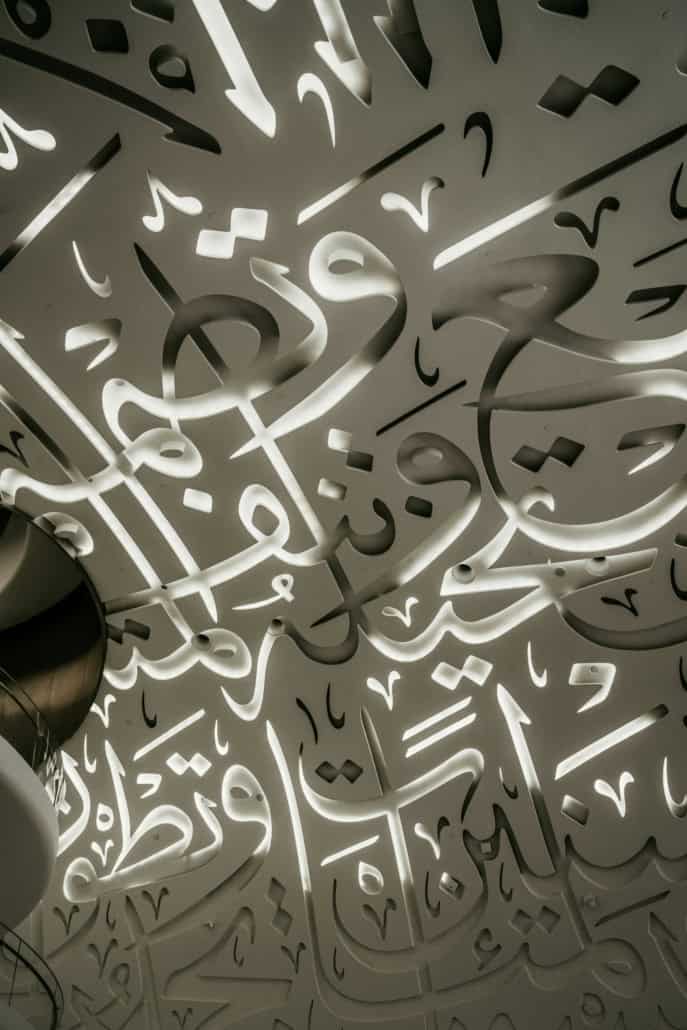
History of science · Fact file
Scholars of the Islamic Golden Age: A Timeline of Big Ideas
Between roughly the 8th and 14th centuries, scholars writing in Arabic made lasting advances in mathematics, medicine, optics, astronomy and philosophy. This timeline introduces 16 of them, where they worked and the ideas they are best known for. Many came from Persia, Central Asia, North Africa or al-Andalus, and Arabic was their shared language of learning.
Quick answer
The Islamic Golden Age usually refers to the period from about the 8th to the 13th or 14th century, centred first on Abbasid Baghdad. Scholars such as al-Khwarizmi (algebra), Ibn al-Haytham (optics), Ibn Sina (medicine) and Ibn Rushd (philosophy) built on Greek, Persian and Indian knowledge and passed new ideas on to Europe.
Key takeaways
- The period is usually dated from the 8th century to the Mongol sack of Baghdad in 1258, though some historians extend it further.
- Baghdad’s House of Wisdom and the translation movement made Greek, Persian and Indian works available in Arabic.
- The scholars came from many regions and backgrounds, but most wrote in Arabic.
- Words like algebra and algorithm come from al-Khwarizmi’s work and name.
- Several of these books, such as Ibn Sina’s Canon of Medicine, were studied in European universities for centuries.
-
c. 780
Mathematics
Al-Khwarizmi
محمد بن موسى الخوارزمي
c. 780 · c. 850 · Worked in Baghdad
His book al-Jabr set out systematic methods for solving linear and quadratic equations and gave algebra its name. The Latin form of his name, Algoritmi, gave us the word algorithm.
Origin: Traditionally said to come from Khwarazm (Central Asia), wrote in Arabic
Read more on Wikipedia ↗ -
c. 800
Education
Fatima al-Fihri
فاطمة بنت محمد الفهرية
c. 800 · c. 880 · Worked in Fez
Traditionally credited with founding the al-Qarawiyyin mosque in Fez around 859, which grew into a major centre of learning. Her story comes from sources written centuries later, so historians treat the details with caution.
Origin: Born in Kairouan (today Tunisia), her family settled in Fez
Read more on Wikipedia ↗ -
c. 800
Engineering
The Banu Musa brothers
محمد وأحمد والحسن بنو موسى بن شاكر
c. 800 · c. 873 · Worked in Baghdad
Three brothers who sponsored translations of Greek texts and wrote on geometry and astronomy. Their Book of Ingenious Devices describes about 100 mechanisms, including automatic fountains and trick vessels. (Dates shown are for Muhammad, the eldest.)
Origin: Sons of an astronomer from Khurasan, raised in Baghdad under the patronage of Caliph al-Maʾmun
Read more on Wikipedia ↗ -
c. 801
Philosophy
Al-Kindi
أبو يوسف يعقوب بن إسحاق الكندي
c. 801 · c. 873 · Worked in Baghdad
Often called the father of Arab philosophy, he worked to bring Greek thought into Arabic. His treatise on deciphering coded messages contains the earliest known description of frequency analysis.
Origin: Arab, born in Kufa (Iraq)
Read more on Wikipedia ↗ -
c. 864
Medicine
Al-Razi (Rhazes)
أبو بكر محمد بن زكريا الرازي
c. 864 · c. 925 · Worked in Ray and Baghdad
A physician who directed hospitals in Ray and Baghdad. His treatise on smallpox and measles is one of the earliest to tell the two diseases apart, and his notes were compiled into the vast medical work al-Hawi.
Origin: Persian, born in Ray (near today’s Tehran), wrote mostly in Arabic
Read more on Wikipedia ↗ -
c. 870
Philosophy
Al-Farabi
أبو نصر محمد الفارابي
c. 870 · c. 950 · Worked in Baghdad, later Aleppo and Damascus
Known as the Second Teacher, after Aristotle, he wrote on logic, music and politics. His best-known book describes the Virtuous City and the qualities of a just ruler.
Origin: From Central Asia (exact birthplace debated), wrote in Arabic
Read more on Wikipedia ↗ -
c. 936
Medicine
Al-Zahrawi (Abulcasis)
أبو القاسم خلف بن عباس الزهراوي
c. 936 · c. 1013 · Worked in Córdoba
His 30-volume medical encyclopedia, al-Tasrif, ends with an illustrated volume on surgery and surgical instruments. Translated into Latin in the 12th century, it was used in Europe for centuries.
Origin: Andalusian, born at Madinat al-Zahra near Córdoba
Read more on Wikipedia ↗ -
c. 944
Astronomy
Mariam al-Ijliya
العجلية بنت العجلي
c. 944 · c. 967 · Worked in Aleppo
Remembered as a skilled astrolabe maker employed by Sayf al-Dawla, ruler of Aleppo from 944 to 967. Almost everything known about her comes from a short mention by Ibn al-Nadim, and the first name Mariam was added much later; her birth and death years are unknown.
Origin: Daughter of the astrolabe maker al-ʿIjli, worked in Aleppo in the 10th century
Read more on Wikipedia ↗ -
c. 965
Optics
Ibn al-Haytham (Alhazen)
أبو علي الحسن بن الحسن بن الهيثم
c. 965 · c. 1040 · Worked in Cairo
His Book of Optics explained that we see because light reflects off objects and enters the eye, and he checked his ideas through careful experiments. Translated into Latin, it shaped European optics for centuries.
Origin: Born in Basra (Iraq), spent his most productive years in Fatimid Cairo
Read more on Wikipedia ↗ -
c. 973
Astronomy
Al-Biruni
أبو الريحان محمد بن أحمد البيروني
c. 973 · c. 1048 · Worked in Khwarazm and Ghazni
A polymath who wrote a detailed study of India’s sciences and beliefs. He also estimated the Earth’s radius with trigonometry, by measuring the dip of the horizon from the top of a hill.
Origin: Born in Kath, Khwarazm (today Uzbekistan), wrote mainly in Arabic
Read more on Wikipedia ↗ -
c. 980
Medicine
Ibn Sina (Avicenna)
أبو علي الحسين بن عبد الله بن سينا
c. 980 · c. 1037 · Worked in Hamadan and Isfahan
His Canon of Medicine became a standard textbook in the Islamic world and in European universities into the 17th century. He also wrote The Book of Healing, a vast encyclopedia of philosophy and science.
Origin: Persian, born near Bukhara (today Uzbekistan), wrote mostly in Arabic
Read more on Wikipedia ↗ -
c. 1100
Geography
Al-Idrisi
أبو عبد الله محمد الإدريسي
c. 1100 · c. 1165 · Worked in Palermo
Made the Tabula Rogeriana (1154) for King Roger II of Sicily, one of the most detailed world maps of the Middle Ages, with an accompanying book describing the known world.
Origin: Born in Ceuta (North Africa), worked at the Norman court of Sicily
Read more on Wikipedia ↗ -
1126
Philosophy
Ibn Rushd (Averroes)
أبو الوليد محمد بن أحمد بن رشد
1126 · 1198 · Worked in Córdoba, Seville and Marrakesh
A judge and court physician whose commentaries on nearly all of Aristotle’s works earned him the title “The Commentator” in Latin Europe. He argued that philosophy and religious law do not contradict each other.
Origin: Andalusian, born in Córdoba
Read more on Wikipedia ↗ -
c. 1136
Engineering
Al-Jazari
بديع الزمان أبو العز إسماعيل بن الرزاز الجزري
c. 1136 · c. 1206 · Worked in Artuqid court, Upper Mesopotamia
Chief engineer to the Artuqid rulers, he wrote the Book of Knowledge of Ingenious Mechanical Devices (1206), with drawings and building instructions for 50 machines, including the famous elephant water clock.
Origin: From the Jazira region of Upper Mesopotamia, between the Tigris and Euphrates
Read more on Wikipedia ↗ -
c. 1210
Medicine
Ibn al-Nafis
علاء الدين علي بن أبي الحزم ابن النفيس
c. 1210 · c. 1288 · Worked in Cairo
Described the pulmonary circulation: blood passes from the right side of the heart through the lungs to the left side. He rejected Galen’s idea of hidden pores in the heart wall, more than three centuries before William Harvey.
Origin: Born in Damascus, worked as a physician in Cairo
Read more on Wikipedia ↗ -
1332
History
Ibn Khaldun
عبد الرحمن بن محمد بن خلدون
1332 · 1406 · Worked in Tunis, Fez and Cairo
His Muqaddimah analyses how dynasties and societies rise and fall, built around the idea of asabiyya, or group solidarity. It is widely seen as a forerunner of sociology and modern historical method.
Origin: Born in Tunis to a family of Andalusian origin
Read more on Wikipedia ↗
What “Islamic Golden Age” usually means
Historians use the term for a period of intense scholarly activity in the Muslim world, usually dated from the late 8th century, under the Abbasid caliphs in Baghdad, to the Mongol sack of the city in 1258. Some extend it into the 14th century or later, which is why figures such as Ibn Khaldun often appear on these lists.
Baghdad was the first great centre, but learning also flourished in Cairo, Córdoba, Damascus, Aleppo, Fez and the cities of Central Asia. Rulers, wealthy families and hospitals all supported scholars.
The translation movement
From the mid-8th to the late 10th century, translators in Baghdad rendered Greek works of philosophy, medicine, mathematics and astronomy into Arabic, often by way of Syriac. Persian and Sanskrit texts were translated too. The House of Wisdom is the best-known name associated with this effort, and Hunayn ibn Ishaq, a Christian physician, was its most famous translator.
Scholars did not simply preserve these texts. They tested, corrected and extended them, and their own books were later translated into Latin in places such as Toledo and Sicily.
Many origins, one language of learning
The scholars on this timeline came from Iraq, Persia, Central Asia, Syria, Egypt, North Africa and al-Andalus. They included Arabs, Persians, Berbers and others, and people of different faiths. Arabic was the common language that let a physician in Córdoba read the work of a philosopher in Bukhara.
That shared language is the reason we speak of Arabic science, even when its authors were not Arab.
Frequently asked questions
What was the Islamic Golden Age?
It is a name historians use for a long period of scientific and cultural activity in the Muslim world, usually dated from the 8th century to the 13th or 14th century. It is closely linked to Abbasid Baghdad, but scholars also worked in Cairo, Córdoba, Damascus, Aleppo, Fez and Central Asia.
What was the House of Wisdom?
The House of Wisdom (Bayt al-Hikma) was a library and centre of scholarship in Abbasid Baghdad, associated with caliphs Harun al-Rashid and al-Maʾmun. Scholars there translated, copied and studied works of science and philosophy. Al-Khwarizmi worked there around 820.
Were all these scholars Arabs?
No. Many were Persian, Central Asian, Berber or Andalusian, and some were Christian, Jewish or Sabian. What they shared was Arabic as the main language of scholarship, much as Latin served scholars in medieval Europe.
Were there women scholars in this period?
Yes, though sources about them are scarce. Fatima al-Fihri is traditionally credited with founding the al-Qarawiyyin mosque in Fez, and al-ʿIjliyya, often called Mariam al-Ijliya, was a respected astrolabe maker in 10th century Aleppo. Many women also studied and taught hadith.
Why do some dates say “c.”?
For many medieval figures, birth and death years are known only roughly or differ between sources. We mark those dates with “c.” (circa, meaning about). For a few people, such as al-ʿIjliyya, no birth or death year is recorded at all.
Sources
- Islamic Golden Age (Wikipedia)
- Graeco-Arabic translation movement (Wikipedia)
- Al-ʿIjliyya (Wikipedia)
- Fatima al-Fihriya (Wikipedia)
Spotted an error? Tell us through the Pitch a Story page and we will correct it.