Language and words · Fact file
Everyday Words From Arabic in English, French and Spanish
Many words you use every day started out in Arabic. They travelled into European languages through trade, science and centuries of contact in Spain and Sicily. Search the list, see what each word first meant and how it got here, then test yourself with the quiz.
Quick answer
Hundreds of English, French and Spanish words come from Arabic. Well-known examples include algebra, algorithm, zero, alcohol, coffee, sugar, cotton, sofa, magazine and admiral. Most arrived in the Middle Ages through Latin translations of Arabic science, Mediterranean trade, and contact in al-Andalus and Sicily, often by way of Spanish or Italian.
Key takeaways
- Spanish has the most Arabic loanwords of the three, a legacy of nearly eight centuries of al-Andalus.
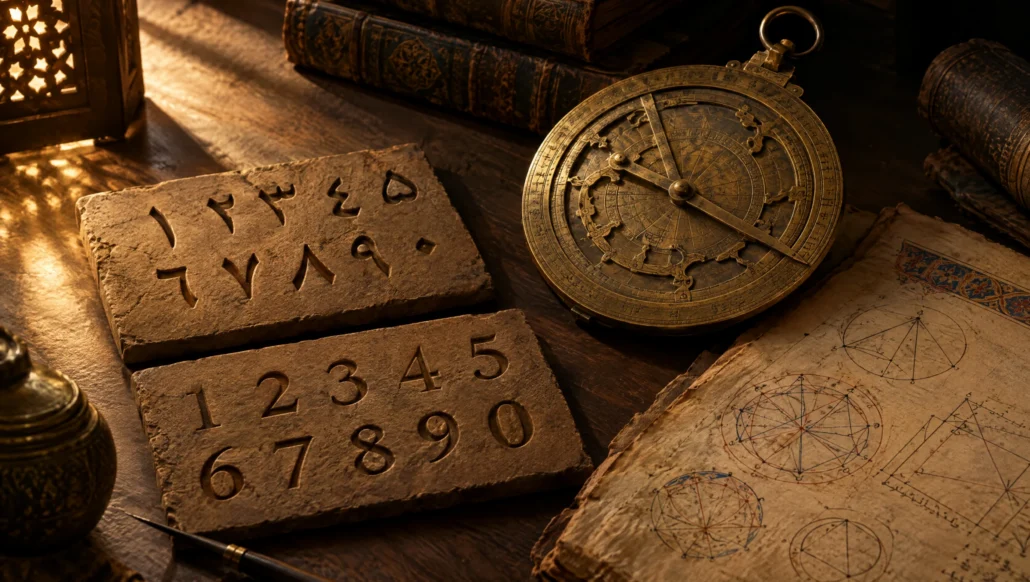
- Many science words, such as algebra, zero and zenith, entered Europe through Latin translations of Arabic books.
- Words beginning with al- or a- in Spanish (algodón, azúcar, almohada) often keep the Arabic article al-.
- Some words passed through Arabic from Persian or Greek before reaching Europe, such as orange, spinach and alchemy.
- Trade routes brought fabrics, foods and sea terms, from muslin and saffron to arsenal and admiral.
Quick quiz
-
algebra
الجبر al-jabr
Original meaning: restoring, putting broken parts back together
From the title of al-Khwarizmi’s book, via Medieval Latin algebra
English: algebra French: algèbre Spanish: álgebra
-
algorithm
الخوارزمي al-Khwārizmī
Original meaning: the man from Khwarazm, the name of a mathematician
From the Latin form of his name, Algoritmi, via Medieval Latin algorismus
English: algorithm French: algorithme Spanish: algoritmo
-
zero
صفر ṣifr
Original meaning: empty
Via Medieval Latin zephirum and Italian zefiro, later zero
English: zero French: zéro Spanish: cero
-
alchemy
الكيمياء al-kīmiyāʾ
Original meaning: the art of transforming metals
Arabic took it from Greek; it reached Europe via Medieval Latin alchimia
English: alchemy French: alchimie Spanish: alquimia
-
alcohol
الكحل al-kuḥl
Original meaning: kohl, a very fine powder
Via Medieval Latin alcohol, first meaning any fine powder, then a distilled essence
English: alcohol French: alcool Spanish: alcohol
-
alkali
القلي al-qily
Original meaning: ashes of burnt saltwort
Via Medieval Latin alkali, a term from alchemy
English: alkali French: alcali Spanish: álcali
-
zenith
سمت الرأس samt ar-raʾs
Original meaning: the path above the head
Via Medieval Latin cenith, from a miscopying of samt
English: zenith French: zénith Spanish: cenit
-
nadir
نظير naẓīr
Original meaning: opposite (to the zenith)
Via Medieval Latin nadir, an astronomy term
English: nadir French: nadir Spanish: nadir
-
coffee
قهوة qahwa
Original meaning: coffee (earlier also a word for wine)
Via Ottoman Turkish kahve and Italian caffè
English: coffee French: café Spanish: café
-
sugar
سكر sukkar
Original meaning: sugar
Arabic took it from Persian; it reached Europe via Medieval Latin succarum and Spanish azúcar
English: sugar French: sucre Spanish: azúcar
-
syrup
شراب sharāb
Original meaning: a drink
Via Medieval Latin siropus and Old French sirop
English: syrup French: sirop Spanish: jarabe
-
sherbet
شربة sharba
Original meaning: a drink, a draught
Via Turkish şerbet; French and Spanish via Italian sorbetto
English: sherbet French: sorbet Spanish: sorbete
-
lemon
ليمون laymūn
Original meaning: lemon
Arabic took it from Persian; via Old French limon and Medieval Latin limo
English: lemon Spanish: limón
-
orange
نارنج nāranj
Original meaning: bitter orange
Arabic took it from Persian nārang; via Spanish naranja and Old French orenge
English: orange French: orange Spanish: naranja
-
saffron
زعفران zaʿfarān
Original meaning: saffron
Via Medieval Latin safranum and Old French safran
English: saffron French: safran Spanish: azafrán
-
spinach
إسفاناخ isfānākh
Original meaning: spinach
Arabic took it from Persian; via Spanish espinaca and Old French espinache
English: spinach French: épinard Spanish: espinaca
-
apricot
البرقوق al-barqūq
Original meaning: the apricot (a word Arabic got from Greek and Latin, “early ripening”)
Via Spanish albaricoque and Catalan abercoc, then French abricot
English: apricot French: abricot Spanish: albaricoque
-
artichoke
الخرشوف al-kharshūf
Original meaning: the artichoke
Via Spanish alcarchofa and northern Italian articiocco
English: artichoke French: artichaut Spanish: alcachofa
-
aceite
الزيت az-zayt
Original meaning: the oil (olive oil)
Directly from Andalusi Arabic into Spanish
Spanish: aceite
-
tariff
تعريف taʿrīf
Original meaning: notification, a list of fees
Via Italian tariffa
English: tariff French: tarif Spanish: tarifa
-
magazine
مخازن makhāzin
Original meaning: storehouses
Via Italian magazzino and French magasin; it first meant a warehouse in all three languages
English: magazine French: magasin Spanish: almacén
-
arsenal
دار الصناعة dār aṣ-ṣināʿa
Original meaning: house of manufacture, a shipyard
Via Venetian arzanà and Italian arsenale
English: arsenal French: arsenal Spanish: arsenal
-
admiral
أمير amīr
Original meaning: commander, prince
Via Medieval Latin amiralis and Old French amiral, from titles such as amīr al-baḥr
English: admiral French: amiral Spanish: almirante
-
muslin
الموصل al-Mawṣil
Original meaning: Mosul, a city in Iraq
Named after the city, via Italian mussolina and French mousseline
English: muslin French: mousseline Spanish: muselina
-
sofa
صفة ṣuffa
Original meaning: a raised bench or platform
Via Turkish sofa, then French sofa
English: sofa French: sofa Spanish: sofá
-
mattress
مطرح maṭraḥ
Original meaning: something thrown down, a cushion to lie on
Borrowed in Sicily into Medieval Latin matracium, then Italian materasso and Old French materas
English: mattress French: matelas
-
jar
جرة jarra
Original meaning: an earthenware jar
Via Spanish or Catalan jarra in Mediterranean trade; Arabic probably took it from Persian
English: jar French: jarre Spanish: jarra
-
almohada
المخدة al-mikhadda
Original meaning: the pillow (from khadd, cheek)
From Andalusi Arabic almukhádda into Spanish
Spanish: almohada
-
giraffe
زرافة zarāfa
Original meaning: giraffe
Via Italian giraffa and French girafe
English: giraffe French: girafe Spanish: jirafa
-
gazelle
غزال ghazāl
Original meaning: gazelle
Via Old French gazel, possibly through Spanish gacela
English: gazelle French: gazelle Spanish: gacela
-
monsoon
موسم mawsim
Original meaning: season
Via Portuguese monção and early Dutch monssoen, sailors’ words for the seasonal wind
English: monsoon French: mousson Spanish: monzón
-
cotton
قطن quṭn
Original meaning: cotton
Via Old French coton and Italian cotone; Spanish took it with the article: algodón
English: cotton French: coton Spanish: algodón
-
checkmate
شاه مات shāh māt
Original meaning: the king is helpless (or the king has died)
Persian shāh (king) with Arabic māt, via Old French eschec mat
English: checkmate French: échec et mat Spanish: jaque mate
-
safari
سفر safar
Original meaning: journey
Via Swahili safari (journey), which took it from Arabic
English: safari French: safari Spanish: safari
-
ojalá
وشاء الله wa shāʾ Allāh
Original meaning: and may God have willed it
From Andalusi Arabic into Spanish, used today to mean “I hope so”
Spanish: ojalá
-
alcalde
القاضي al-qāḍī
Original meaning: the judge
From Andalusi Arabic into Spanish, where it came to mean mayor
Spanish: alcalde
Why so many words came from Arabic
From the 9th century on, Arabic was a leading language of science, trade and government from Central Asia to Spain. When European scholars wanted the latest work in mathematics, astronomy, medicine and chemistry, they found it in Arabic books. In the 12th century, translators in Toledo and in Sicily turned many of these into Latin, carrying words such as algebra, zenith and alkali with them.
Merchants did the rest. Goods like sugar, saffron, cotton and coffee arrived with their Arabic names, often through Italian ports such as Venice and Genoa.
Al-Andalus and the al- prefix
Arabic was spoken in much of the Iberian Peninsula for nearly eight centuries, so Spanish and Portuguese absorbed far more Arabic words than English or French. Spanish often borrowed the noun together with the Arabic article al-, which is why so many arabisms start with al- or a-: algodón (cotton), almohada (pillow), aceite (oil), azúcar (sugar).
English and French usually received the same words without the article, through Latin, Italian or French, so cotton and coton have no al- in front.
How to spot an Arabic loanword
Some clues help. In Spanish, look for al-, a- or az- at the start of a noun. In all three languages, look for words tied to medieval science (algebra, alchemy, zero), to luxury trade (saffron, muslin, sugar) or to the sea (admiral, arsenal, monsoon).
Clues are not proof, though. Many words that look Arabic are not, and some Arabic words came originally from Persian, Greek or Sanskrit. A good etymological dictionary, such as Merriam-Webster, the CNRTL for French or the RAE for Spanish, gives the real route.
Frequently asked questions
How many English words come from Arabic?
There is no single agreed number, because it depends on whether you count rare and technical words and words that came through other languages. Dictionaries list several hundred English words with Arabic roots. Only a few dozen of them are common in everyday speech.
Why does Spanish have so many Arabic words?
Arabic was spoken across much of the Iberian Peninsula from 711 until the fall of Granada in 1492. Over those centuries, Spanish absorbed thousands of words for farming, food, building, administration and daily life. Many of them, like aceite and alcalde, never passed into English or French.
Does every word starting with al- come from Arabic?
No. The al- prefix is a strong clue in Spanish, but plenty of words begin with al- for other reasons, such as English almost or Spanish alto, which come from Old English and Latin. Always check a good etymological dictionary.
Do magazine and almacén mean the same thing?
They share the same Arabic root, makhāzin (storehouses), but they drifted apart. Spanish almacén still means a warehouse or store, French magasin means a shop, and English magazine came to mean an ammunition store and later a periodical full of articles.
Is “ojalá” really from Arabic?
Yes. The Real Academia Española traces ojalá to an Andalusi Arabic phrase meaning roughly “and God has willed it”. Today Spanish speakers use it to express a hope or wish, much like “I hope so” in English.
Sources
- Etymonline: mattress
- Etymonline: sofa
- Etymonline: jar
- Diccionario de la lengua española (RAE): ojalá
- Diccionario de la lengua española (RAE): almohada
Spotted an error? Tell us through the Pitch a Story page and we will correct it.